the unlocatable
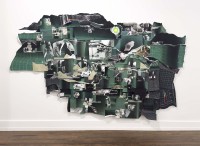
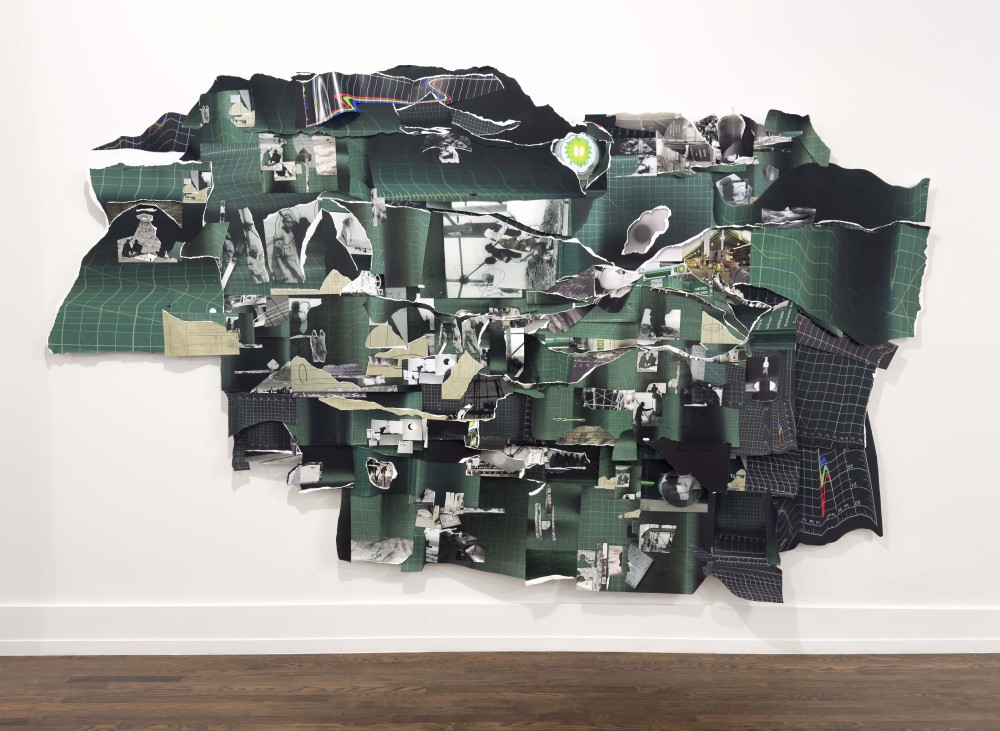
The Unlocatable is a lens-based multimedia project that reconfigures British Petroleum’s (modern-day BP, formerly the Anglo-Persian Oil Company) archives documenting the company’s first oil extraction in southern Iran through immersive photo-collage installation, prints, and stop-motion animation, exposing archival absences and remaking the visual regimes that shaped petro-imperial history.
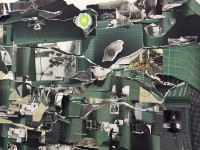
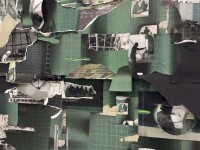
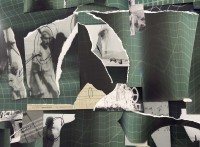
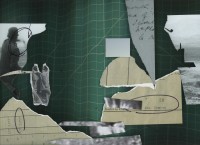
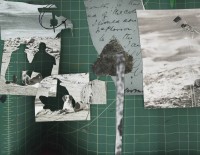
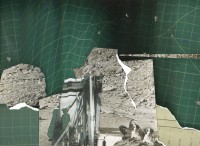
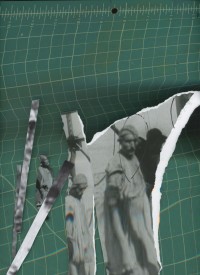
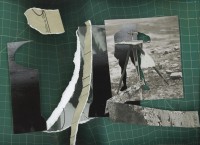
At the center of the work is an evolving collage practice that treats the archive not as a stable repository, but as a site of material inquiry, fragmentation, and reconfiguration. The medium serves both as a metaphor and methodology, making acts of extraction and displacement active in its form and content. Photographic fragments are cut, torn, juxtaposed, layered, rearranged, and re-captured directly on a flatbed scanner. The scanner functions as a recording device and a performative stage, creating a visual field that is simultaneously flat and deep, close and far. Through the act of deconstruction and reconstruction, new images foreground human and non-human subjects that have remained marginal within official narratives. Rather than attempting to resolve archival absences, the project stays with erasure, amplifying it through moments of visual and temporal silence that negate truth-telling.
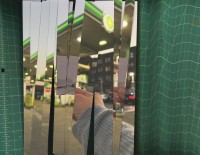
Fragmented images of BP gas stations across Brooklyn, where I currently reside, accompany the archival material and historic photographs. Captured over a century later, these images anchor the repository with familiarity and produce another temporal gap that disrupts the linear logic of the archive. Photographic fragments are arranged against a distorted grid in shades of green and black. This grid is produced using self-healing cutting mats, which are manipulated by hand over the scanner. The mat is bent, stressed, and physically warped during capture and operates simultaneously as a tool, surface, and image, referencing one of the imperial tools for surveying and homogenizing land, locating a subject, coordinating, and more. These gestures produce unstable image fields in which fragments partially align and break apart, creating a tension between order and disorientation.